Drug discovery often speaks as though selectivity and precision were synonyms. A selective molecule is clean; a multi-target molecule is dirty. That distinction is useful when off-target activity is accidental and toxic. It becomes misleading when the disease itself is a distributed network and the desired therapeutic effect requires coordinated control of more than one node.
Precision should mean producing the intended biological effect in the intended patient with an acceptable safety margin. Sometimes that comes from exquisite single-target selectivity. Sometimes it comes from a deliberately designed target-engagement profile.
Diseases are not organized like screening assays
A biochemical assay isolates one protein because isolation makes measurement possible. A disease does not respect that simplification. Signalling pathways contain redundancy, feedback, parallel routes, compensatory adaptation, and cell-cell interactions. Blocking one node can cause another pathway to restore the disease phenotype. Cancer is the obvious example, but network compensation also appears in inflammation, neuropsychiatry, infection, fibrosis, and metabolic disease.
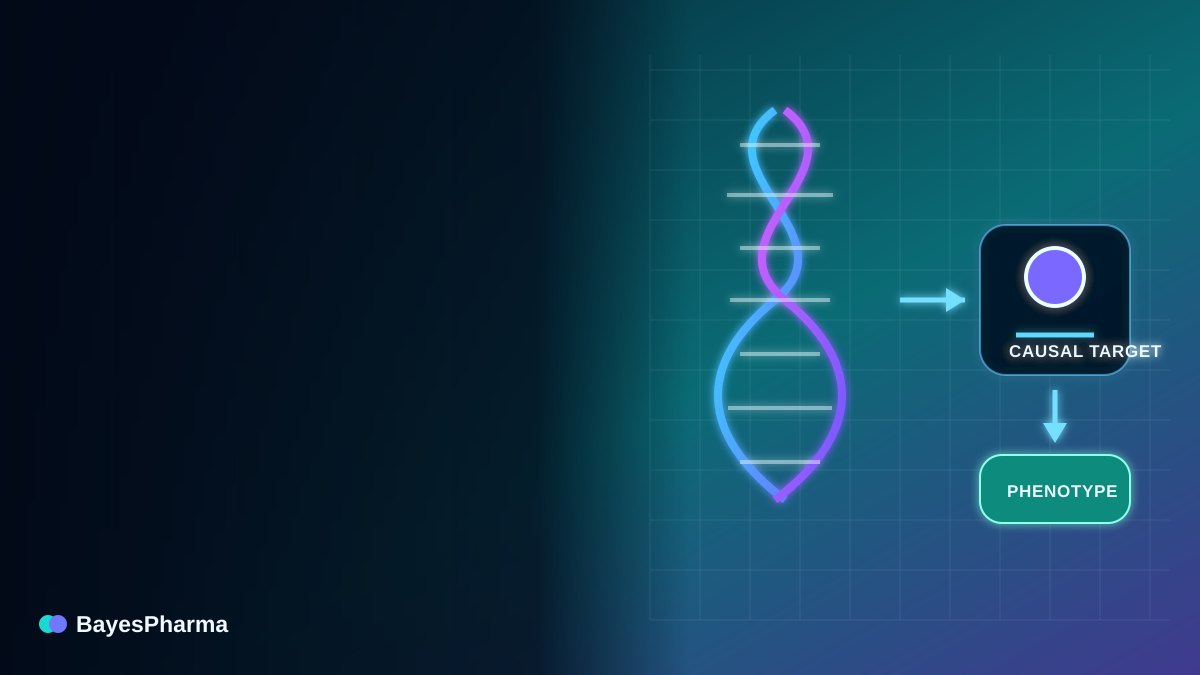
Andrew Hopkins's network-pharmacology argument was not that selectivity is unimportant. It was that drug action should be understood in the topology of biological networks rather than as isolated one-drug-one-target pairs. The human drug-target network described by Muhammed Yildirim and colleagues likewise showed that approved medicines frequently engage multiple proteins.
Promiscuity and designed polypharmacology are different
Promiscuity is poorly controlled activity across targets that may be mechanistically irrelevant or unsafe. Designed polypharmacology is a specified pattern of activities chosen because the combined perturbation is expected to improve efficacy, prevent escape, or balance a biological system.
The difference is not the number of targets. It is whether the target profile is intentional, quantitatively characterized, achievable at clinically relevant unbound exposure, and linked to a mechanistic hypothesis.
A target profile has ratios, not just checkboxes
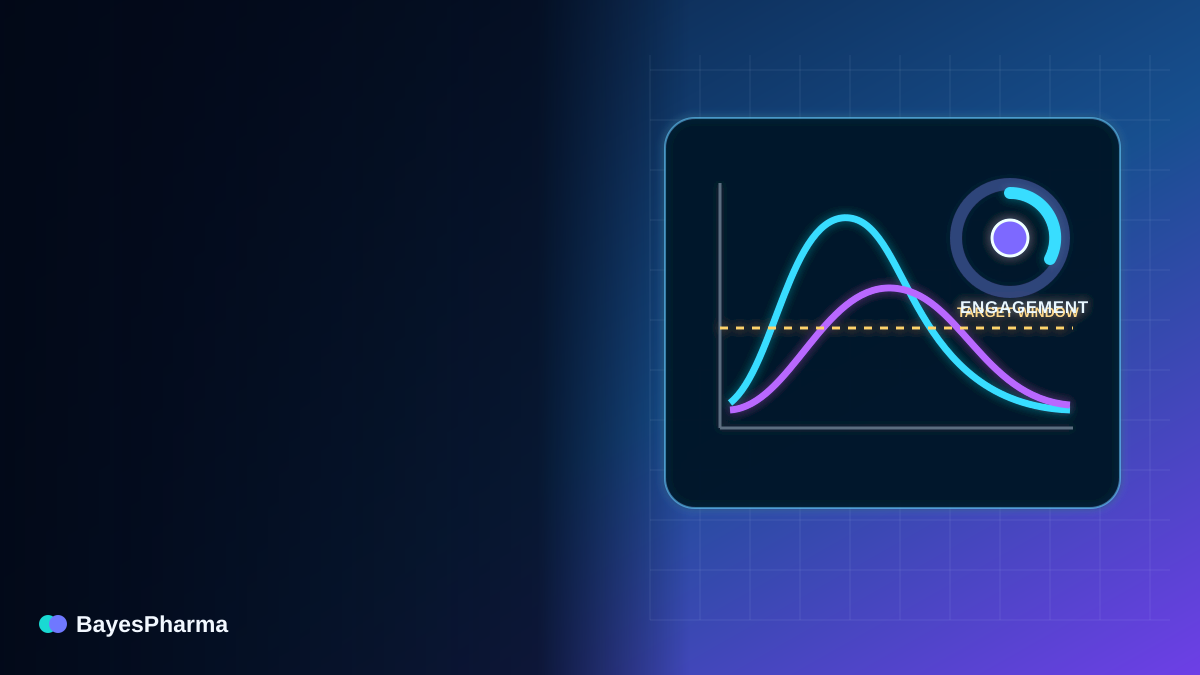
Suppose a programme wants strong inhibition of target A, moderate inhibition of target B, and minimal activity on target C. The design problem is not “hit A and B.” It is to achieve the right potency ratio across A, B, and C after accounting for free concentration, tissue distribution, target abundance, and binding kinetics. A molecule that looks beautifully balanced in purified assays may become functionally unbalanced in cells because one target is highly expressed, intracellular, rapidly turning over, or located in a tissue the drug barely reaches.
Multi-target design is a quantitative exposure problem disguised as a medicinal-chemistry problem.
When one molecule may be better than a combination
A fixed multi-target molecule can synchronize exposure: every cell that sees one activity also sees the other in a linked ratio. It may simplify development, adherence, and pharmacokinetic variability compared with two separate medicines. It can also access cooperative binding modes or prevent resistance when multiple escape routes are suppressed together.
But a single molecule also fixes the ratio. If different patients need different balances, or if toxicities require independent dose adjustment, a combination can be superior. Combinations allow modular control, staged introduction, and separate discontinuation. The right choice depends on therapeutic window, mechanism, variability, resistance, and development feasibility -- not on an ideology that single-target or multi-target is always cleaner.
Selectivity panels should be interpreted mechanistically
Large off-target panels are valuable, but a flat list of percent inhibition can create false certainty. The relevance of an off-target signal depends on:
- unbound clinical exposure and tissue concentration;
- target expression in vulnerable organs;
- functional activity rather than binding alone;
- duration and reversibility of engagement;
- genetic or disease context;
- whether the activity contributes to efficacy, toxicity, or neither.
A weak interaction can matter if exposure is high and the target is safety-critical. A potent interaction may be irrelevant if the drug never reaches that compartment. This is why selectivity cannot be judged without PK, tissue distribution, and systems context.
The therapeutic window belongs to the whole target pattern
Single-target programmes often optimize a potency-selectivity margin: activity on the desired target versus the nearest safety liability. A polypharmacology programme needs a multi-dimensional window: enough exposure to engage the efficacy network, not so much that the liability network is activated. The optimal molecule may not be the most potent at any individual target. It may be the molecule whose target profile remains correctly proportioned across realistic patient exposures.
Design the profile, then design the evidence
A defensible polypharmacology programme should pre-specify the target combination, desired direction and magnitude at each target, predicted network consequence, biomarkers of each component, exposure requirements, and safety boundaries. Perturbation experiments should compare single and combined effects. Resistance models should test whether the target pattern actually closes escape routes. PK/PD models should ask whether the profile can be achieved in humans.
Selectivity remains essential. The correction is that selectivity should be selective for a therapeutic mechanism, not necessarily for one protein. Precision is the alignment of chemistry, exposure, target pattern, disease network, and patient context.