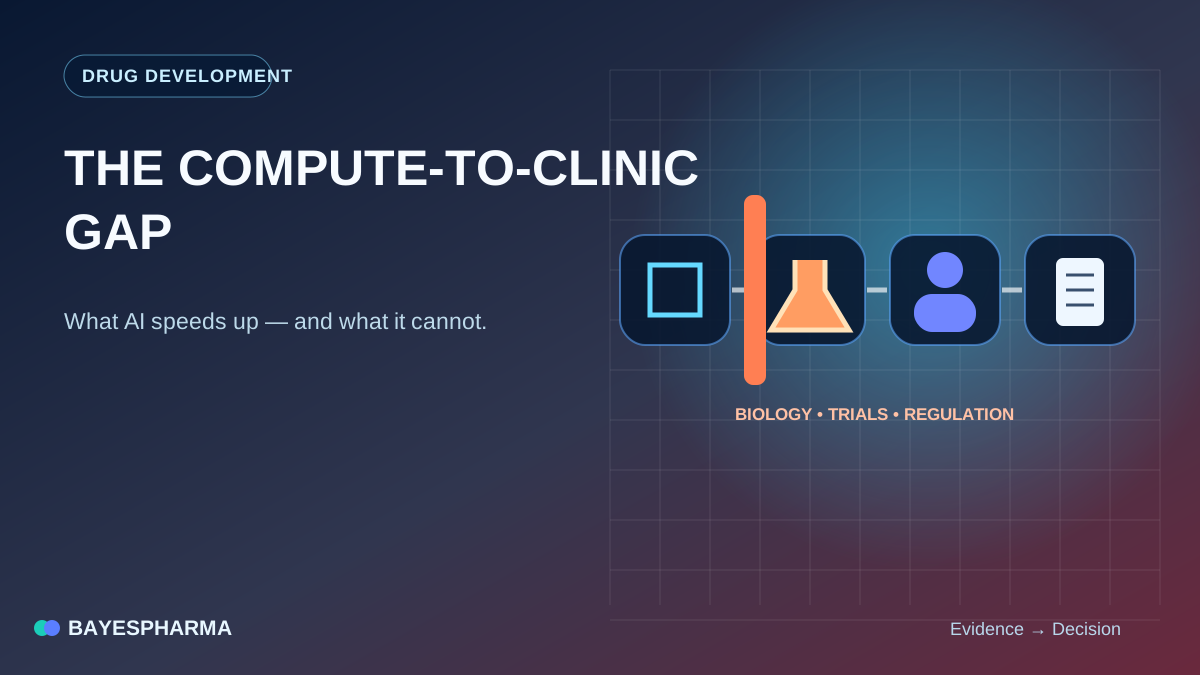
Drug discovery presentations often end with a molecular structure and a triumphant table: nanomolar potency, good selectivity, acceptable microsomal stability. The structure is called a “candidate,” as though the difficult part is finished.
But patients do not take molecular drawings. They take tablets, capsules, injections, inhaled particles, infusions, or devices manufactured at scale and administered through a regimen. The clinically relevant object is not the molecule alone. It is the molecule plus its physical form, formulation, exposure, metabolism, dose, schedule, manufacturing process, and patient population.
Potency cannot rescue absent exposure
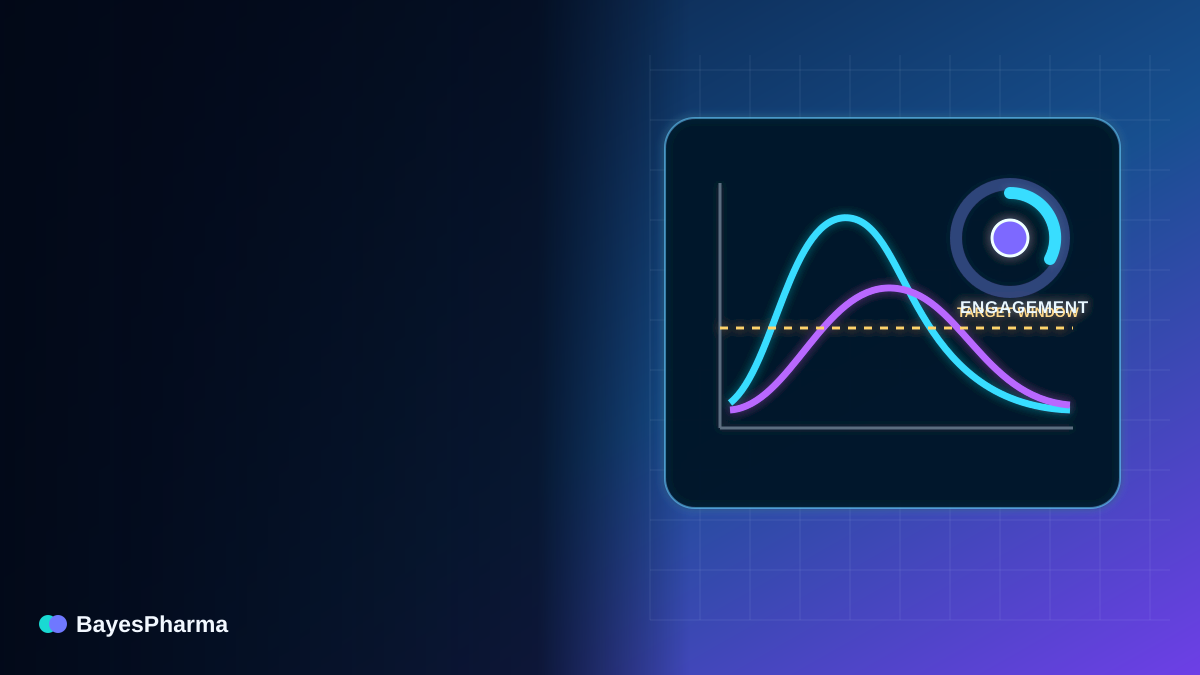
A compound can be exquisitely potent in a biochemical assay and pharmacologically useless if insufficient unbound drug reaches the site of action. Exposure is shaped by solubility, dissolution, permeability, first-pass metabolism, transporters, protein binding, tissue distribution, and clearance.
This is why concentration-response relationships must eventually connect to pharmacokinetics. The practical question is not “does the molecule inhibit the target?” but “can a tolerable regimen maintain enough active concentration at the relevant site for long enough to produce the desired effect?”
A tenfold improvement in biochemical potency may matter less than a twofold improvement in oral bioavailability or half-life. Conversely, increasing lipophilicity to gain potency can reduce solubility, increase nonspecific binding, worsen clearance, and create safety liabilities. Medicinal chemistry is a system of coupled trade-offs.
Solid state is part of pharmacology
The same chemical structure can exist as different polymorphs, salts, solvates, hydrates, co-crystals, or amorphous forms. Those forms can differ in dissolution rate, stability, hygroscopicity, processability, and bioavailability. A form discovered late can force reformulation, bridging studies, manufacturing changes, or new intellectual-property strategy.
Solid-state risk is not a problem reserved for CMC teams after candidate nomination. Early evidence about crystallinity, melting behavior, moisture sensitivity, salt formation, and amorphous feasibility can change which analogue should become the candidate.
A slightly less potent molecule with a robust crystalline form and predictable dissolution can be a far better medicine than a potent glassy compound that precipitates, converts between polymorphs, or cannot be produced consistently.
Formulation does not fix every molecule
Formulation science is powerful: salts, amorphous solid dispersions, lipid systems, particle engineering, complexation, and enabling excipients can rescue difficult compounds. But every rescue has limits and costs. It can add development time, manufacturing complexity, food effects, excipient constraints, scale-up risk, and variability.
The correct question is not “can formulation solve this?” Almost anything can be made into an early toxicology or first-in-human formulation with enough effort. The better question is whether the formulation strategy remains credible for the intended dose, route, patient population, commercial scale, and duration of therapy.
Developability is a multi-objective decision
Candidate selection should make the trade-offs explicit across at least five connected domains:
- Pharmacology: potency, selectivity, target engagement, and duration of effect.
- Physicochemical behavior: solubility, ionization, lipophilicity, permeability, and chemical stability.
- Disposition: absorption, metabolism, transporters, clearance, distribution, and drug-drug interaction risk.
- Safety: off-target pharmacology, reactive metabolites, organ liabilities, exposure margins, and patient-specific vulnerabilities.
- Product feasibility: solid form, formulation, synthetic route, impurity control, scalability, and storage.
No single score can represent these domains without hiding important assumptions. A useful developability assessment shows where the candidate is strong, where evidence is missing, which liabilities are coupled, and which experiment could change the decision.
The candidate is not the structure with the best profile today. It is the structure with the most credible path to a reproducible therapeutic exposure tomorrow.
Bring the target product profile upstream
Developability depends on what the medicine is supposed to become. A short-course oncology therapy can tolerate properties that would be unacceptable for lifelong prevention. A central nervous system drug must solve brain exposure. A pediatric product faces dose flexibility and excipient constraints. A high-dose anti-infective has a very different solubility burden from a microgram-potency hormone.
The target product profile should therefore influence discovery before candidate nomination:
- Intended route and dosage form
- Expected clinical dose and dosing frequency
- Required tissue exposure
- Patient age, organ function, and comorbidities
- Concomitant medicines and DDI sensitivity
- Treatment duration and safety margin
- Commercial manufacturing and storage constraints
Without this context, “drug-like” becomes a generic label instead of a program-specific judgment.
The next-best developability experiment
Teams do not need every assay at once. They need the experiment most likely to reveal a program-killing constraint while there is still time to redesign. Depending on the candidate, that may be a kinetic solubility study, a permeability experiment, metabolite identification, transporter assessment, a salt screen, a polymorph screen, an exposure study, or a formulation stress test.
The ordering matters. Running a sophisticated efficacy model before confirming that exposure was achieved can produce a false biological conclusion. Optimizing potency while ignoring precipitation can deepen investment in the wrong series. Developability is therefore not a checklist at the end of discovery; it is part of the experimental logic throughout discovery.
From molecule selection to medicine design
The strongest programs treat chemistry, pharmacology, DMPK, toxicology, pharmaceutics, and CMC as one connected design problem. They do not wait for a handoff to reveal that each function has been optimizing a different object.
The molecule is the beginning of the medicine. The final therapeutic performance emerges from the combination of molecule, formulation, regimen, manufacturing control, and patient biology. Bringing those constraints forward does not slow discovery. It prevents the fastest possible route to the wrong candidate.